
Why the Inventory Is the Starting Point
You cannot manage what you do not know you have. Before anything else, it is essential to have a complete, up-to-date inventory: which devices exist, who uses them, what operating system they are running, what software is installed, and when they were last updated.
In many companies that information does not exist with any accuracy, or it does, but scattered across several tools that do not talk to each other. The first real step toward control is bringing all of that data into a single place.
What Changes When Device Management Is Done Centrally
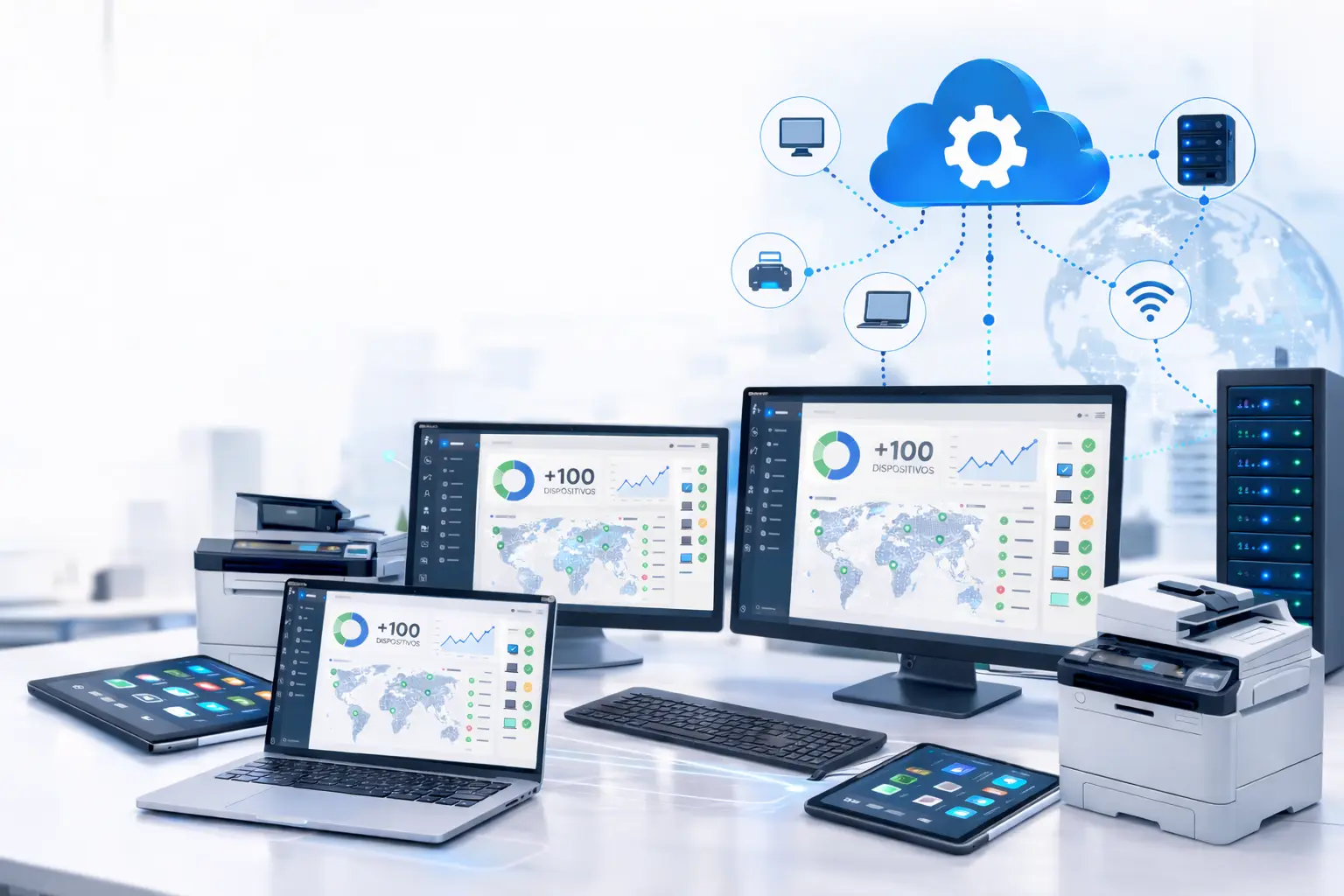
Centralising device management does not mean adding bureaucracy. It means that when something goes wrong, you know exactly where the problem is and who needs to fix it. It means security updates roll out across the entire fleet without relying on each user to accept them. And it means that when someone leaves the company, you can revoke access and recover the device without depending on anyone's memory.
The most concrete benefits of working with a centralised platform are these:
-
Full visibility over the device fleet
In real time, with no need for periodic manual audits.
-
Remote deployment of updates
Applications and security policies pushed to all devices at once.
-
Automatic detection
Of devices that do not meet the company's minimum security requirements.
-
Lifecycle management
From device onboarding through to retirement, with the inventory updated at every step.
-
Faster incident response
Because the technician already knows what is on the device before opening a ticket.
-
Software licence control
Avoid paying for tools nobody uses, or unknowingly using tools without a valid licence.
The Tools Are Not the Problem, the Process Is
There is excellent software available for device management at scale. But technology alone solves nothing without a process behind it: what happens when a new device arrives, who approves what software gets installed, how a lost or stolen device is handled, how often the inventory gets reviewed.
Those are the questions that separate a company that truly controls its infrastructure from one that simply has tools installed.
Signs That Your Device Management Needs to Change
It is not always easy to tell when the current system has stopped working, because the symptoms tend to appear gradually. There are clear signs, though: the IT department spends more time firefighting than on planned tasks, there are devices in active use with no updated inventory entry, and security updates depend on each user installing them manually. Add to that not knowing how many active licences the company holds right now, or onboarding a new employee taking longer than it should because the process has never been standardised.
If any of this sounds familiar, the problem is not the size of your fleet, it is the method. And the sooner it is addressed, the less it costs to fix.
At Open Tech We Take Care of Your Device Management
We help companies implement centralised device management systems, from the initial inventory through to policy configuration, software deployment, and ongoing support. Whether you have 100 devices or 500, the goal is always the same: give you real control over your infrastructure.
If you would like to know how we can help, get in touch with us. We would be happy to talk.
Learn More About Device Management